
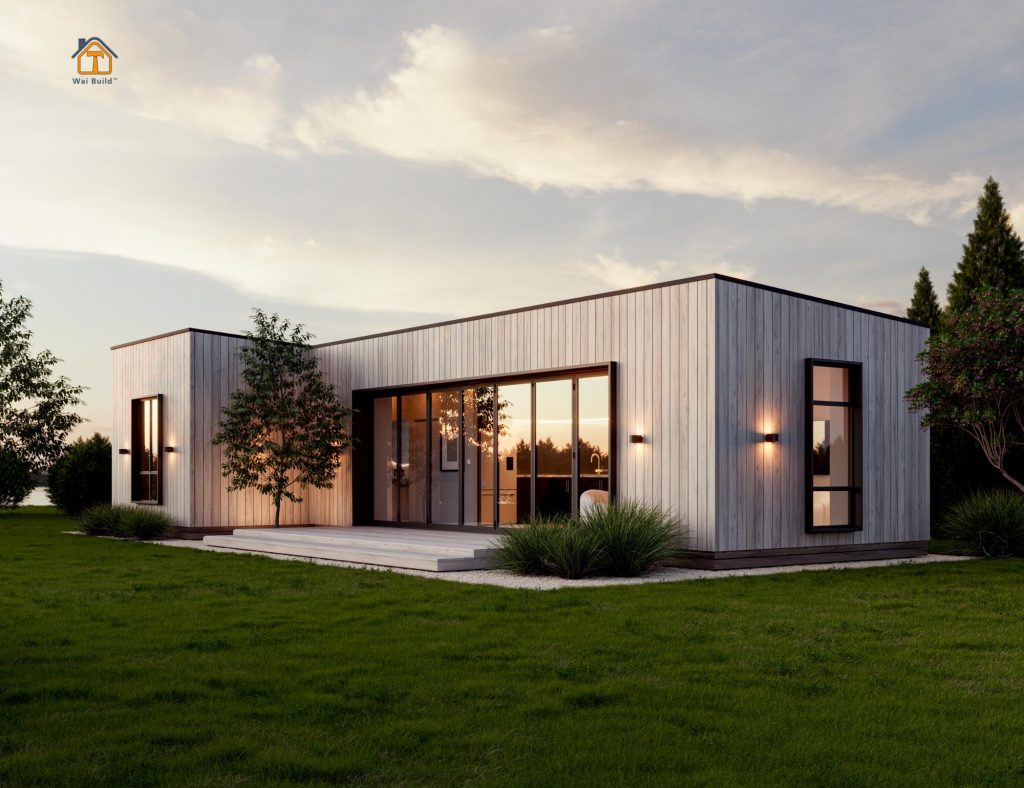
Granny Flat in New Zealand
Granny flats are one of the most practical ways to add living space, create rental income, or house family members — without the cost and complexity of a full new build.
At Wai Build, we specialise in granny flats designed and built for New Zealand conditions, council requirements, and real-world budgets. Our approach focuses on durability, compliance, and clear upfront pricing, whether you choose a kitset or a full turnkey build
This page explains everything you need to know before you start.
If you’re building locally, we also cover granny flats in the Wairarapa, including Masterton, Carterton, and South Wairarapa council considerations.
What Is a Granny Flat?
A granny flat is a self-contained, secondary dwelling located on an existing residential property. It typically includes:
- A bedroom or sleeping area
- Bathroom
- Kitchen or kitchenette
- Living space
- Independent services (or shared where allowed)
Granny flats are commonly used for:
- Extended family accommodation
- Rental income
- Downsizing while remaining on the same property
- Home offices or guest accommodation
Granny Flat Size Rules in New Zealand (Explained Simply)
Because rules vary between councils, we always recommend confirming requirements early — this avoids delays and redesign costs later. This is done by submitting a PIM.
Granny Flat Regulations in New Zealand (Updated January 2026)
Granny Flat Regulations in New Zealand (Updated January 2026)
From 15 January 2026, the New Zealand Government introduced changes to the Building Act to make it easier to deliver small, well-designed granny flats, while still maintaining building quality and safety standards.
These changes are commonly referred to as the MBIE granny flat consent exemption.
What Changed Under the 2026 MBIE Rules?
Under the updated rules, some granny flats up to 70 m² may be built without a building consent, if all exemption conditions are met.
This does not mean granny flats are “unregulated” — it means a different compliance pathway now exists.
Key points in plain language:
- The exemption applies only to small, simple, standalone dwellings
- The granny flat must be single-storey
- It must be 70 m² or less
- It must meet all NZ Building Code requirements
- Work must be carried out or supervised by licensed building professionals
- Councils must still be notified before and after construction
Important: Council Involvement Still Applies
Even where a building consent is not required:
- A Project Information Memorandum (PIM) is still required
- Local planning rules, overlays, and hazards still apply
- Site coverage, setbacks, services, and access must still comply
- Records and compliance documentation must be provided on completion
In some locations, resource consent may still be required, depending on zoning or site constraints.
Because rules vary between councils, early confirmation is critical.
Who Can Use the Consent Exemption?
The exemption is intended for standardised, low-risk granny flats, not complex or highly customised builds.
It generally applies where:
- The design is proven and compliant
- Construction is completed by or under the supervision of Licensed Building Practitioners (LBPs)
- All documentation requirements are met
If any exemption condition cannot be met, the project simply reverts to the standard consent process.
How Wai Build Designs for the 2026 Rules
Wai Build granny flat designs are developed with the 2026 MBIE framework in mind.
Our approach focuses on:
- Simple, compliant layouts
- Proven construction methods
- Clear documentation
- Options to proceed with or without consent, depending on site conditions
Where a consent exemption is suitable, we help clients follow the correct process.
Where it isn’t, we manage the consent pathway clearly and transparently.
Kitset vs Turnkey Granny Flats
There are two common ways to build a granny flat. Neither is “better” — it depends on how involved you want to be.
Kitset Granny Flats
A kitset typically includes:
- Full materials package for the granny flat
- Pre-designed, council-compliant plans
- Clearly specified inclusions
Best suited for:
- Builders or experienced trades
- Owners managing their own build
- Reducing overall cost
Turnkey Granny Flats
A turnkey build includes:
- Design
- PIM
- All Materials
- All Labour
- All Site work
- Warranty and Guarentee’s
- Project management
- Final handover ready to live in
Best suited for:
- Hands-off owners
- Fixed timeframes
- Cost certainty
Wai Build offers both options, with the same core designs and quality standards.
How Much Does a Granny Flat Cost?
Costs vary based on size, site conditions, services, and finish level, but typical ballpark ranges are:
- Kitset granny flats: lower upfront cost, labour, electrical and plumbing excluded
- Turnkey granny flats: higher upfront cost, everything included
Factors that affect price:
- Ground conditions and foundation type
- Distance to services (water, sewer, power)
- Wind zone and seismic requirements
- Cladding, roofing, and interior finishes
- Access to the site
Because no two sites are the same, pricing is always confirmed after a site assessment.
Consent and Council Considerations
Even when a granny flat is permitted in principle, there are still important compliance steps:
- Meeting the exempt conditions
- Drainage and service approvals
- Fire separation (where required)
- Insulation and energy efficiency compliance
- Vehicle access and parking rules
- Etc
Wai Build designs its granny flats to meet NZ Building Code requirements and typical council expectations, reducing approval risk.
Why Wai Build Is Different
What sets Wai Build apart is not just the design — it’s the process.
- Designs suited to real NZ conditions
- Clear inclusions (no vague allowances)
- Options for kitset or turnkey
- Practical layouts, not marketing concepts
- Built by experienced New Zealand builders
Our focus is on buildable, compliant, and durable homes, not just drawings.
Frequently Asked Questions
Do granny flats add value to a property?
In many cases, yes — especially when they provide independent living or rental income.
Can I rent out a granny flat?
This depends on local council rules and zoning. Many councils allow it, but it must be checked.
Do granny flats need separate services?
Not always. Some councils allow shared services; others require separation.
How long does a granny flat take to build?
Timeframes vary depending on consent and build type, but most projects follow a clear staged process.
View Granny Flat Designs (Free Access)
If you’d like to see actual granny flat designs, specifications, and layouts:
👉 Access our Design Library
Registration is free and gives you access to:
- Multiple granny flat designs
- Layouts and specifications
- Clear inclusions
Final Note
This page is intended to educate first.
If you’re ready to discuss your site, budget, or options, the next step is simple — review the designs and talk through what works for your property.
FAQ : Frequently Asked Questions
In many cases, no. From 15 January 2026, new rules allow qualifying granny flats up to 70 m² to be built without a building or resource consent, provided all exemption conditions are met.
To qualify for the exemption:
The granny flat is a standalone, single-storey dwelling.
It is no larger than 70 m² in internal floor area.
It has a simple design that meets the NZ Building Code.
Work is carried out or supervised by licensed building professionals.
You obtain a Project Information Memorandum (PIM) from council before starting work, and provide completion documentation after.
Yes. Even though formal consents may not be required, you must:
Notify your local council before construction begins.
Provide records and certificates of work to the council when the project is completed.
Ensure all exemption conditions are met.
No. Restricted building work must be carried out or supervised by Licensed Building Practitioners (LBPs) or other qualified professionals for the exemption to apply.
The exemption exists at the national level, but local rules (e.g., site coverage, hazards, overlays, district plan requirements) still apply. In many cases you must check National Environmental Standards (NES-DMRU) or local planning rules even if consents aren’t needed for the structure itself.
Regulatory note:
Granny flat regulations are subject to council interpretation and site-specific conditions. The information on this page is provided as general guidance only. Wai Build will confirm the correct compliance pathway for each project before construction begins.